

The ‘Colours of Life’ are a series of five colours that Soul Revival Church has used extensively over the years to summarise the story of Scripture. This January, we are using these colours to preach through an overview of the biblical narrative. Like I say regularly to the children of Soul Revival, the Bible is a big book, but if you can remember five colours and what they stand for, you can know the key moments in the story and how you fit into the story of Scripture. Find out more here.
Below is the text of my second sermon in this series on Light.

Sermon Passage: Genesis 2:4-25
The Colours of Life
This morning, we are continuing our series on The Colours of Life. This is a series of five colours that we have used extensively throughout the life of Soul Revival to summarise the story of Scripture. If you can remember five colours and what they mean, you can know the whole story of Scripture. It’s a big book, but with five colours, you can know the key movements in the story and how YOU fit into the story of Scripture.
Here they are:
GREEN stands for CREATION; in the beginning, God made everything
WHITE stands for LIGHT; the light that comes from a perfect, unadulterated friendship with God
BLACK stands for DARKNESS; the darkness that comes from our sin and how that sin breaks our relationships with God and puts us under judgement and death.
RED stands for JESUS; both his love and his blood, which through the cross cleanses us from the stain of sin and redeems us from the judgement that our sin puts us under.
GREEN, WHITE, BLACK, RED, YELLOW: if you can remember these five colours, you know the whole Bible story.
Living With Our Creator
If you’ve been around other churches, school Scripture, or Youth Groups, you might have heard the story of the Bible, or the Gospel narrative, described a few different ways with different colours.
According to Wikipedia, the original “wordless book” concept dates back to Charles Spurgeon in 1866. He used just three colours: Black (sinful state of humans), Red (blood of Jesus), and White (perfect righteousness that God has given to believers; the clean page).
Dwight Moody in 1875 added in GOLD after white to represent Heaven; these were the same colours that Hudson Taylor used in his missionary work to China during the same period, the late 1800’s.
If you’ve been involved with SRE in public schools, you’ve probably learned or taught the version that puts CREATION at the start, then SIN, JESUS, FORGIVENESS, inserts blue for the HOLY SPIRIT to represent the life we have in Christ before heaven, and then HEAVEN.
All of these, of course, tell the story of the Gospel in essentially the same way, just with slightly different emphases.
But here’s what I’ve always appreciated about the way that Soul Revival has done the five colours. I’ve always really liked, not only that we highlight the goodness of God’s creation, putting the GREEN colour up front, but we also slow down enough in the narrative to emphasise the WHITE colour BEFORE we get to the darkness of sin.

Before we say what went wrong with the world (which we’ll get to next week), we highlight the goodness of the first human’s relationship with God. Genesis 1, last week, and Genesis 2, this week, establish the whole of the Biblical storyline, the entire narrative of Scripture, the entire narrative of God’s plans, intentions and actions in the world, are set up in these two chapters. And that is this:
The whole story of Scripture is about God’s desire to live with his people.
That’s what Genesis 1-2 is all about. It’s what Genesis is about, it’s what the Exodus is about, it’s what the Tabernacle and Temple are all about, it’s what Jesus’ ministry is all about, and [spoiler alert for a few weeks time when we look at YELLOW] it’s what New Creation is all about. And so, that’s what today’s focus on the WHITE colour is going to be about.
Before we dig into the narrative, though, here’s an important distinction that we’ll need to keep in mind. The distinction between HOUSE and HOME.
When we first bought our unit, it didn’t actually exist. We had the opportunity to buy off the plan, and so when we made out purchase, we actually bought what I called an “eschatological unit”. Now but not yet. A piece of sky that we hoped would one day be a unit.
If you like, our unit was “formless and empty”.
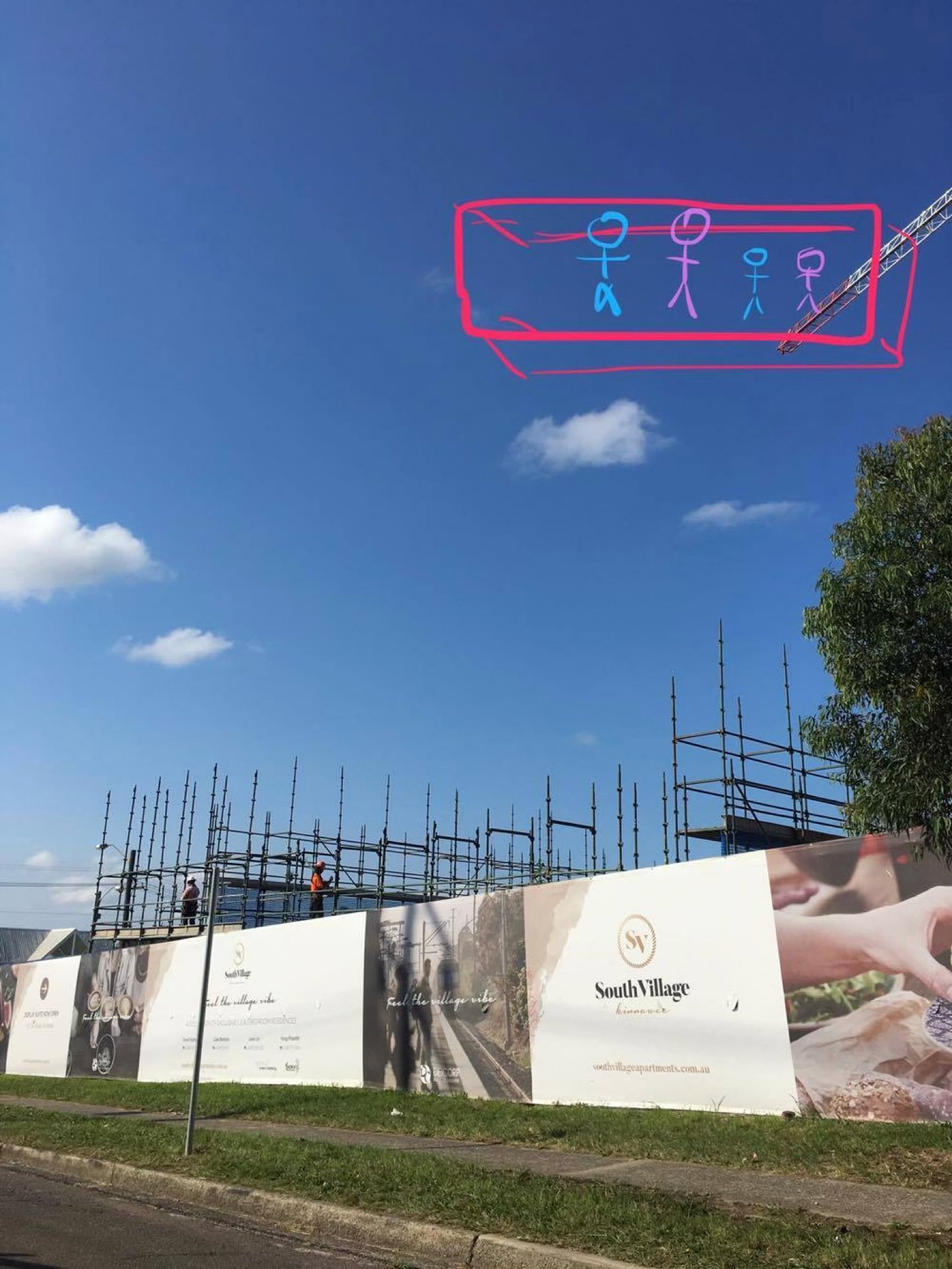
But over many months, we watched the unit complex being built, until finally it reached the height of the 9th floor that we had purchased. Some of you might have had a similar experience watching a house being built, or a renovation being added to a home.
For the purposes of our HOUSE vs. HOME distinction, this was the building of a HOUSE, the actual physical structure.
The concrete was being poured, the dry wall was being put in, the electrical and plumbing systems were installed, the carpet was laid and the paint painted. All of this signalled the material construction of the HOUSE.
But then one day, we get the call. Your HOUSE is ready to become a HOME.
So we packed up our boxes in our old home, gathered the pets together, and moved into our new unit. But was it a HOME yet? Kinda…
Over the next few days and weeks we formed and filled the unit. We unpacked all the boxes, emptied out all the books, made up our new rooms, made space for the cats, we added plants and hung picture. All of these things helped transform the physical structure that was a HOUSE into the actual live experience of being a HOME.
But perhaps it really became a HOME on New Year’s Day 2019, just a few weeks after we moved in. Because that day was the day after hosting our first sleepover with our kids best friends, stayed up late to watch the fireworks from our balcony, and in the morning, celebrated the new year by eating ice cream for breakfast.
Why was this the moment our HOUSE became a HOME? Because on this day, we were living purposefully in the space in the way it was designed to be lived in, with friends and family and relationship.
What’s the difference between HOUSE and HOME? The difference is in the story you are telling and the details you focus on. For our unit, the HOUSE story is full of scaffolding and concrete, plumbing and electricals. But the HOME story is full of relationships, family and friends, enjoying intentional space together. Everything in the HOME story points towards the function of the home; not what the bench is made from (I assume some sort of stone composite), but the purpose it is being put towards (eating ice cream for breakfast with good friends).
Why does this distinction matter? Because, as Old Testament scholars John Walton as pointed out1, Genesis 1-2 is a HOME story, not a HOUSE story.
This is why we saw this warning last week:
“Do not try to turn this into a science lesson, for such an emphasis misses the point entirely… Speak of the Bible’s message in the Bible’s terms.”
John H. Walton & Kim E. Walton
Scientists are like engineers, concreters, electricians and plumbers; they are interested in the material construction of things.
But the writer of Genesis is not an engineer nor a scientist. They are disinterested in the material construction of the world, the HOW, WHAT, and WHEN. The HOUSE story.
The writer of Genesis is a storyteller, a poet, an author, who is interested in the HOME story. The story that tells of the FUNCTION of the world. WHO the world was made for and what they are going to do in it.
The whole story of Scripture is about God’s desire to live with his people.
That’s why this distinction matters. Because it helps us to read Genesis 1-2 correctly. It helps us to understand the meaning and purpose of these passages, and — for our purposes this weekend — for understanding why the WHITE colour matters so much.
God Gets The Home Ready
Last week with the GREEN colour, that God made the world. We noticed that it was FORMLESS and EMPTY, but that God then FORMS it and FILLS it.
In the beginning God created the heavens and the earth. Now the earth was formless and empty, darkness was over the surface of the deep, and the Spirit of God was hovering over the waters.
Genesis 1:1-2
We saw that it had purposeful order and gratuitous beauty. Towards what end? For humans to live in!
“God created an environment perfectly suited for human habitation.”
John H. Walton & Kim E. Walton
Read last week’s sermon here.

God Brings His People In
At Soul Revival Kids, we have been exploring Genesis through the Cross Formed Kids catechism. Here’s one question and answer that we looked at.
Question: What are humans?
Answer: Humans are living creatures, made from dirt and made alive with God’s breath.
Here’s where we find that in the Bible.
Then the Lord God formed a man from the dust of the ground and breathed into his nostrils the breath of life, and the man became a living being.
Genesis 2:7
What’s going on here? Well, there’s an important balance of two seemingly contradictory ideas that Genesis draws out. (1) How similar we are to the rest of creation, and (2) how different we are to the rest of creation.
Let’s look at how similar we are. Genesis tells us that man was made from the dust of the ground. What else is made from the ground in Genesis 2?
The Lord God made all kinds of trees grow out of the ground…
Now the Lord God had formed out of the ground all the wild animals and all the birds in the sky.
Genesis 2:9, 19
All the trees, and all the animals and birds also grow out of, or are formed our of, the ground. We are made from the same stuff as the rest of creation. Genesis wants us to know how similar humankind is to the rest of God’s creation.
Now, we said Genesis isn’t about science, but let’s have some science-y fun anyway.
If we look at the level of our genetic coding, our DNA, we can see this. Humans have 98% of the same genetic coding as chimpanzees, about the same for pigs, and 80% of the same genetic coding as cows. But let’s not stop there.
We have 60% of the same genetic coding as bananas, about 45% as cabbages and 25% of the same genetic coding as daffodils.
Scientists, working at the cellular level, are showing just what the author of Genesis is telling us. That all of creation shares a common connection. In the language of Genesis, we are all made from the dust of the ground.
BUT, similarity is only half the story. Remember, two seemingly contradictory ideas, (1) how similar we are to the rest of creation, but (2) how different and distinct.
So if it’s not being made from dirt, what is the difference?
Here’s another catechism questions that Soul Revival Kids has been exploring.
Question: What privilege did humans have above the rest of creation?
Answer: Humans are made as the Image of God.
Again, here’s where we read this in the Bible.
So God created mankind in his own image, in the image of God he created them; male and female he created them.
Genesis 1:27
So humankind is different, because unlike anything else in all creation, humans are made in the image of God.
But what does it mean to be the image of God? Theologians and philosophers have wondered about this for centuries. What is it that makes human unique, special, different from chimpanzees, pig, cows, bananas, cabbages or daffodils?
Here are some of the options that have been offered2:
Understanding: Perhaps it’s the way we understand, our mental abilities, or our intelligence.
Free Agnecy: Perhaps it is our freedom, our ability to consider and make choices, that puts us above cows and chimpanzees.
Division of Labour: Maybe it is the way we can organise ourselves to work and get things done on scale.
Sympathy: Perhaps it is our ability to sympathise with others, to listen to them and understand what they are going through.
Relationships: Or, really simply, perhaps it is the way that we can have relationships that puts us above cabbages or daffodils.
But, no. None of these answer are at the heart of what Genesis is getting at when it talks about being the image of God.
Next catechism question.
Question: What does it mean to be the image of God?
Answer: God’s image represents God on earth to rule and care for all creation on God’s behalf.
What makes us different is not anything particularly about us; it’s not an ability, or something we can notice through science (like our brain’s capacity for intelligence) or in social sciences (like the way we can work together and get things done). Rather, the difference is in the ROLE that God has given us, the role of representing God on earth and ruling and caring for all creation on God’s behalf.
Here is the key application point: being made in the image of God, being made as God’s image, is a gift given to all humankind.

Because it is a GIFT, therefore we do not earn it, we do not achieve it, and we cannot lose it.
Understanding, intelligence, division of labour, free agency, sympathy, relationships… Not only do we share some of these things to some extent with some other creatures, but they are attributes that can come and go.
There are significant vulnerable humans for whom these things might not be true: the child in utero, those with profound mental or physical disabilities, or those with dementia or other cognitive or relational deterioration. If what makes humans unique and special is an attribute that we can gain or lose, develop or diminish, then certain humans have more dignity, worth and respect than others.
At it’s extreme ends, abortion and euthanasia make perfect sense. Australian philosopher Peter Singer is notorious for taking an atheist and evolutionary theory of human value to it’s extreme. He has argued that pigs have more right to life than a newborn human infant. Which is horrific, but morally consistent with a worldview that finds human distinctiveness is something other than God’s GIFT of image-ness.
But if we take seriously that all humankind, of any age, any gender, any ability or disability, any level of health or ill-health, any level of mental health or ill-health, any socio-economic class, any legal residential status, any religion, any political persuasion, any theological position, any distinction you can think about AT ALL… then all are intrinsically valuable, worthy of dignity, honour or respect, because EVERY human being is made in the image of God.
And therefore…? Treat them as such. Treat all humans, everyone you meet, everyone you talk to, everyone you talk about, everyone you walk past, everyone you come across online, treat everyone with the value and dignity and respect that they deserve—not because of what they do or don’t do, not because of what they earn or don’t earn, not because of what they believe or don’t believe—but because they are a human being, made in the image of God.
You can see how this has huge implications for how we speak about others, how we organise our suburbs and cities, how we implement our politics, how we conduct ourselves online. Keep spinning this out during the week. Talk with God and talk with others about what the implications of this may be for you.
God Lives At Rest With His People
God gets the HOME of creation ready, he BRINGS his people in, and finally, God LIVES AT REST WITH THEM.
The Lord God took the man and put him in the Garden of Eden to work it and take care of it… The Lord God said, ‘It is not good for the man to be alone. I will make a helper suitable for him.’
Genesis 2:15
God gives humankind, men and women, together in partnership, the responsibility to work the garden, to take care of it, to rule over the fish and the bird and the livestock and the wild animals, to be fruitful and increase in number, to fill the earth and subdue it.
“That doesn’t sound much like rest”, you might say. Which is true if “rest” is only understood as “not effort”. But here’s the climax of the entire passage and of our sermon this morning.
Rest is less about labour and more about relationship.
This is why when we talk about the WHITE colour, we talk about LIGHT, the light that comes from a perfect, unadulterated friendship with God.
What was really special about Adam and Eve’s existence in the Garden of Eden was not just their experience of the Garden itself with all the plants and animals and birds and fish, not just their relationship they had with each other, but ultimately, what was really special about the Garden was their perfect relationship with God.
That’s why sometimes when we talk about the Colours of Life, we talk about WHITE representing FRIENDSHIP. GREEN, God creates everything. WHITE, God creates humankind as special, unique, different, his image, to be his friends.

God gets the home ready, he creates and brings his people into that home, and then he lives in that home, at rest with his people.
Next week, we’re going to look at the colour BLACK and see all that went wrong.
But I want to finish with one more verse. Jesus’ invitation into his rest.
“Come to me, all you who are weary and burdened, and I will give you rest.”
Matthew 11:28
As I said in the beginning, the whole story of Scripture is about God’s desire to live with his people. Genesis sets up this story, we’ll look next week at what went wrong with this story.
But ultimately, the story of Christianity is that God, the creator of the whole cosmos, the creator of humankind, the bestower of the gift of IMAGENESS that gives you honour and dignity and worth, invites you into FRIENDSHIP with him through his Son Jesus. He invites you into his REST, the rest of a perfect, unadulterated and eternal relationship.
This is the whole point of the Bible, the whole of Christianity, the whole of the story points towards this fact, that God’s desire is to live with his people, and he desires that YOU be part of that people too.
John H. Walton (2009) The Lost World of Genesis One & John H. Walton (2015) The Lost World of Adam and Eve.
Adapted from Christopher Watkin (2023), Biblical Critical Theory.