

The following is the text of my sermon on John 15:18-16:4a preached at Soul Revival Church, Kirrawee, on Sunday, March 15, 2026.
Last week, we read the first half of John 15 (vv.1-17) and looked at Jesus’ words of ‘remaining’, or ‘abiding’. The text for today (John 15:18-16:4) is part two of Jesus’ speech, where he now tackles the question: What does a life abiding in Christ look like?
“I am the vine; you are the branches. If you remain in me and I in you, you will bear much fruit; apart from me you can do nothing… If you remain in me and my words remain in you, ask whatever you wish, and it will be done for you.”
John 15:5,7
Just like a branch remaining in the vine in order to live, to be nourished, to bear fruit, so must we remain in Jesus in order to spiritually live, be spiritually nourished and to bear the fruit that Jesus calls us to bear. As we read further along with Jesus’ teachings, the discussion turns to what this abiding life looks like. What ought we as disciples of Jesus expect this life to be like?
Let me share with you Jemal’s story from Open Doors. (Lightly edited)
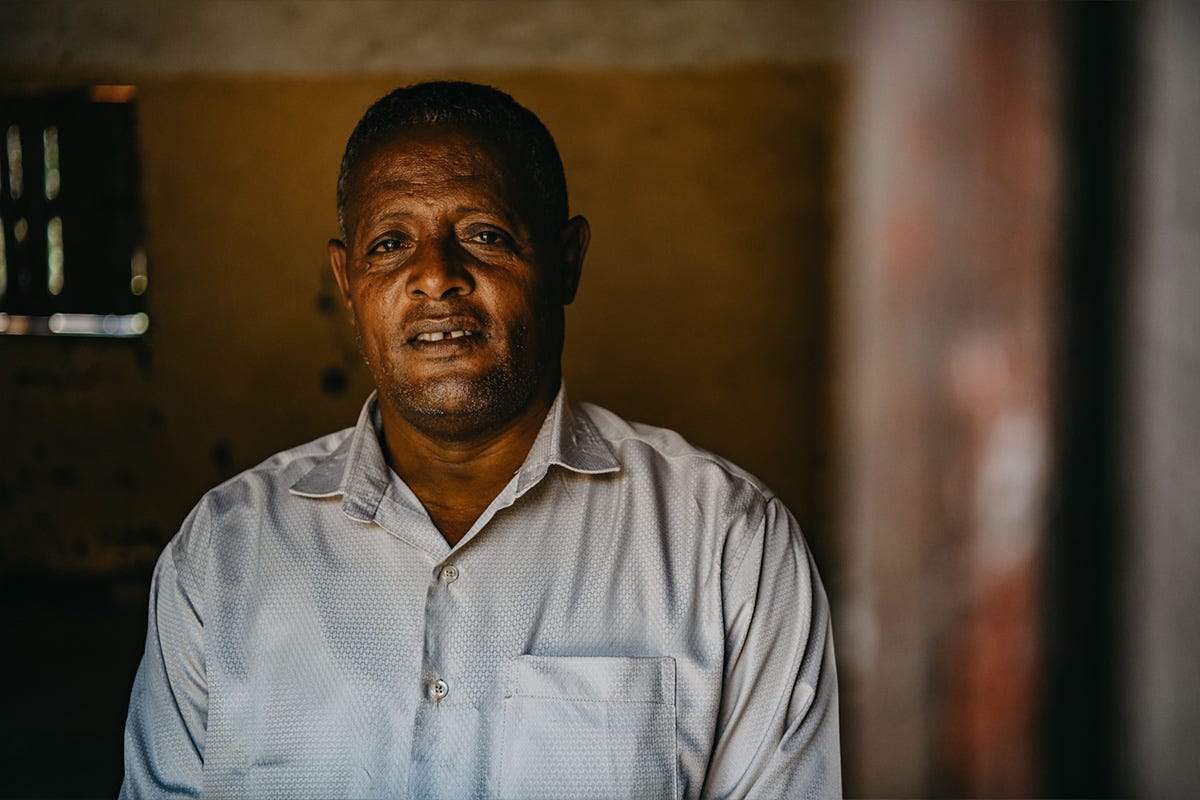
This is Jemal (not his real name for security reasons). Jemal and his wife, Fatima, were Muslims in Ethiopia who became Christians as young parents, enduring the customary rejection of family and neighbours. But they were part of a strong faith community, and Jemal pursued peace with Muslims around him. He became a successful man through his steel manufacturing and woodwork businesses. Life was stable and secure.
“We had a very good life,” he says heavily. “My whole family and I go to church and worship God on Sundays and Wednesdays.”
Then, visiting Muslim clerics gathered in local mosques to target them. “[The clerics] began by isolating us,” Jemal remembers. “They told the community not to talk to us. For six months, they did their work in secret.”
The silent treatment escalated to boycotting Christian businesses, then erupted into a night and day of mob violence.
“By Tuesday, they even tried to kill me,” he says, still in disbelief. “In just one hour, they destroyed everything I owned and had built up over the years. In a single day, they turned everything to ash.”
Over 215 Christian homes were destroyed, and 375 families—including Jemal’s—went on the run. Their goal, he explains, was simple: “to eliminate Christianity.”
Jemal fights back tears as he relives the moment his pregnant daughter went into labour during the chaos. At the hospital, no doctor would treat her.
“The doctors refused because she was a Christian,” Jemal says, wiping tears away. “One doctor finally felt sorry for her and gave her her own head covering to disguise her. Then she gave birth. I was so stressed that I might lose her.”
During the chaos, Jemal and his wife had also been separated from their other children.
“My greatest fear was that they would kill my children,” he says. “I was overwhelmed and paralysed. Still, the feeling of that moment remains with me.”
What does a life abiding in Christ look like for Jemal and his family? It looks like social isolation, a destroyed business, and a doctor’s refusal to provide necessary medical aid to his daughter. It looks like fleeing for your life, fear that muslim clerics may kill you and your children, it looks like fear and a sense of paralysis.
It is this kind of abiding life that Jesus is preparing his disciples for in John 15-16. Notice the words that he uses:
‘If the world hates you…’
‘That is why the world hates you…’
‘If they persecuted me, they will persecute you also.’John 15:18-20
‘They will put you out of the synagogue; in fact, the time is coming when anyone who kills you will think they are offering a service to God.’
John 16:2
What does a life abiding in Christ look like? In a word: Persecution.
Here’s how Open Doors defines persecution:
Persecution is any form of hostility experienced as a result of following Jesus. This can look different for the hundreds of millions of believers who face persecution every day.
For some, it is a denial of basic needs like clean water, food and healthcare, because of their faith in Jesus. Or rejection from their non-Christian family and community. For others, Christian persecution is acts of physical violence, imprisonment, or even death.
Over 388 million Christians now face high to extreme levels of persecution and discrimination for their faith.
1 in 7 Christians worldwide, 1 in 5 Christians in Africa, 2 in 5 Christians in Asia, and 1 in 12 Christians in Latin America.
The leading trends in Christian persecution have a common denominator of violence.
Open Doors uses 9 categories to talk about persecution, noting that in many countries more than one of these may be in effect at any one time:
Islamic Oppression – Any violent or non-violent action used to bring countries, communities, and households under Islamic control. (e.g., Somalia & Pakistan)
Religious Nationalism – Using the country’s majority religion to imply that Christians do not qualify as citizens. (e.g., India & Myanmar)
Clan Oppression – Instances where a clan or extended family ensures the ongoing practice of traditional values or belief systems by force. (e.g., Afghanistan & Laos)
Ethno-Religious Hostility – When one ethnic group subjects another to hostility based on their religion. (e.g., Sudan & Nigeria)
Christian Denominational Protectionism – Making one Christian denomination the only legitimate expression of Christianity in the country. (e.g., Eritrea & Ethiopia)
Communist and Post-Communist Oppression – To monitor and control Christians and churches through a system based on communist values. (e.g., China & North Korea)
Secular Intolerance – To eradicate Christian expression from public life and impose atheistic secularism. (e.g., Uzbekistan & Cuba)
Dictatorial Paranoia – Persecution derived from an authoritarian government that does everything to maintain power, including tearing down organised groups like Christians. (e.g., Eritrea & Nicaragua)
Organised Corruption & Crime – Gangs and criminal groups create a climate of anarchy and corruption for selfish gain. Christians will often speak out against them and become targets for persecution. (e.g., Mexico & Colombia)
For hundreds of millions of Christians around the globe, THIS is what a life abiding in Christ looks like.
New Testament scholar and former Bishop of North Sydney, Dr Paul Barnett, puts it like this: “The vine grows in a harsh landscape.”1 This is the connecting thread between last week and this week. Abide in the vine, but be prepared, because the landscape—the garden—that the vine currently inhabits is a harsh landscape.
That’s today’s sermon in a nutshell. Let’s dig in deeper with three basic questions:
WHY might Jesus’ disciples expect hardship, hatred and persecution?
WHAT might be the persecution we could expect in 2026 in Sydney?
SO WHAT? How might we respond to the persecution we face?
WHY?
Here’s what Jesus says,
‘If the world hates you, keep in mind that it hated me first. If you belonged to the world, it would love you as its own. As it is, you do not belong to the world, but I have chosen you out of the world. That is why the world hates you.’
John 15:18-19
Jesus continues to contrast between himself and “the world” that John has been emphasising since the beginning of his Gospel.
The true light that gives light to everyone was coming into the world. He was in the world, and though the world was made through him, the world did not recognise him. He came to that which was his own, but his own did not receive him. Yet to all who did receive him, to those who believed in his name, he gave the right to become children of God.
John 1:9-12
Light has come into the world, but people loved darkness instead of light because their deeds were evil. Everyone who does evil hates the light, and will not come into the light for fear that their deeds will be exposed. But whoever lives by the truth comes into the light, so that it may be seen plainly that what they have done has been done in the sight of God.
John 3:18-19
Years ago, I heard a preacher speak about the difference between Christmas beetles and cockroaches. Christmas beetles are attracted to the light. They love the light. They spend all summer tapping against your windows and get caught in the flyscreen because they are desperately trying to get to the light. Cockroaches, on the other hand, hate the light. If you flick a light on in your kitchen in the middle of the night and there are cockroaches about, they scatter. Back under the fridge, back inside the cupboard. They hate the light. They flee from the light. They’d rather be anywhere, as long as it’s dark and away from the light.
This is the distinction that Jesus is making. That some are attracted to him, flock to him, cling to him, have nowhere else to go other than to him (Jn. 6:68). And others refuse to come to him, reject him, flee from him and find anywhere else to be other than with him.

But there is another important thread to weave in here, and that is, you become like that which you belong to. Like a stick of celery placed in a cup of coloured water, you will take on the colour, the flavour, the values, the beliefs, and the patterns and practices of the communities that you spend time in. It’s like a marinade. You will taste like, smell like, behave like, that which you abide in.
Sociologists have several theories and sub-theories about this. But a significant one is called Reference Group Theory. This is the idea that we don’t simply have values and then find a group; we often find a group and gradually acquire the values. Another sub-theory is called Normative Social Influence, which describes the pressure — often unspoken — to conform to group norms in order to be accepted and avoid social exclusion.
Don’t worry about the names (unless you like nerding out on sociology like me). Here’s the key point, both from the Scriptures and from our study of how social systems work: You become like that which you belong to or which you aspire to belong to. The social environment does far more shaping than most of us are comfortable admitting.
If you need a pop-culture example, take my favourite chick-flick, Sweet Home Alabama. An Alabama girl has moved to New York City. Upon returning home, the difference between who she was and who she has become raises eyebrows. She has become like New York City. And the change that has been made in her appearance, her accent, her attitudes and her friendships makes her obnoxious to her old group of friends and family.
Once again, here’s what Jesus says,
‘If you belonged to the world, it would love you as its own.
As it is, you do not belong to the world, but I have chosen you out of the world. That is why the world hates you.’
John 15:19
If we belong to the world, we will behave like the world, take on the values and belief systems of the world. We’ll begin to smell like the world, taste like the world, and value the values of the world.
But, brothers and sisters, you have been chosen out of the world. We don’t belong to the world. We belong to Jesus. And so as we abide in Jesus, we will not only take on all the flavour of Jesus, not only act more like Jesus and behave more like Jesus, but this will increasingly look, sound, taste and smell more and more different from the world.
And this is WHY we might find that the world hates us.
Because if the world hates the light, if the world hates Jesus, if the world is in love with darkness and flees from the light, is scared by the light, and threatened by the light, then the more you look, sound, taste and smell like the light, the more friction you will find between you and the world.
Why might Christians find themselves living a persecuted life? Because the more the Christian resembles Jesus, the more friction will exist between the values, lifestyle, beliefs and practices of the Christian compared to the world.
“They will treat you this way because of my name.”
John 15:21
WHAT?
Next question: WHAT kind of persecuted life ought we to expect?
We started with Jemal’s story and the statistics around what persecution looks like in the majority world. But what about here in 21st-century Sydney? What kind of persecution ought we to expect?
And to answer that, I want to jump back to what we talked about at the end of last year when we looked at 1 Peter.
I preached a whole sermon back in October, asking this question: “What do you expect the Christian life to be like between here and eternity?” I’m not going to re-preach the whole sermon. If you want to read it, you can find it here:
Living Well on the Way Home

This week, Soul Revival Church started a new preaching series on 1 Peter entitled ‘Living Well On The Way Home’. Over the next six weeks, we will be reading 1 Peter together and asking what it looks like to live as Christians in this world as we await the return of King Jesus and our life in New Creation together. One question I am particularly interested in is
But here’s the quick version.
At the time of the Bible, and still today in many of the countries where there is strong opposition to, persecution of, and hatred towards Christians and Christianity, there was little overlap between the ethics and belief systems of Christianity compared to the Empire.
But, through the spread of Christianity in Europe, the overlap between Christianity and “the West” increased, so that for a long time in the West, the definition of a “good Christian” and a “good Australian” had a high degree of overlap. Never completely aligned, but there was a strong commonality between the virtues, beliefs, ethics and practices of both categories.
However, over the last 40-50 years in particular, we’ve noticed a pulling apart of these two identities. So that the differences between being a “good Christian” and being a “good Australian” have become more noticeable.
So, with that quick recap, WHAT kind of persecuted life ought we to expect as 21st-century Australians?
If we go back to Open Doors’ categories, we can notice the differences. We can continue to praise God that at this point in history, eight of the nine categories of persecution are not characteristic of Australia, largely due to our Western heritage.
Christians in Australia are not facing Islamic Oppression, Religious Nationalism, Clan Oppression, Ethno-Religious Hostility, Christian Denominational Protectionism, Communist and Post-Communist Oppression, Dictatorial Paranoia, or Organised Corruption & Crime. That’s not to say those things will never happen in Australia, but none of them are characteristic of the Australian Christian experience in the way they are in other countries that we mentioned earlier.
The ninth category, Secular Intolerance, is defined by Open Doors as seeking to “eradicate Christian expression from public life and impose atheistic secularism” and is something which we have noticed an increase in in recent years.
Three quick high-profile examples.
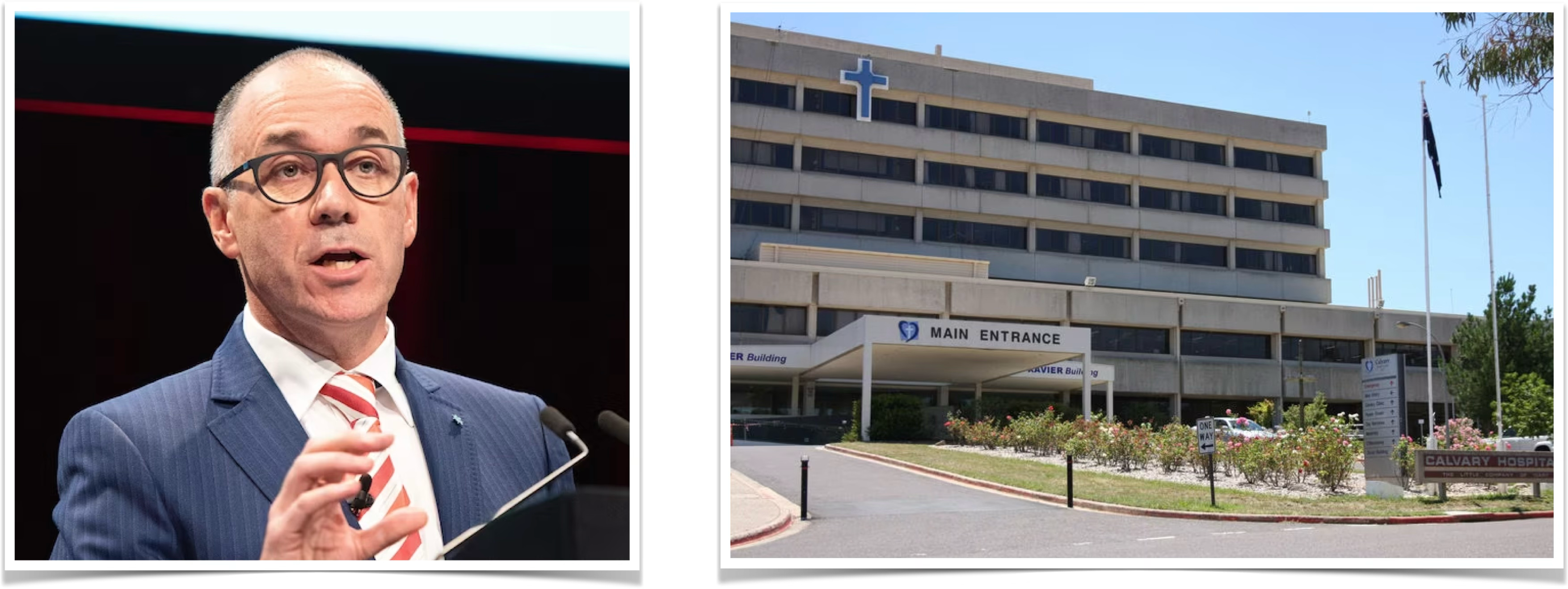
There was the case of Andrew Thorburn, who was appointed the chief executive of the Essendon AFL Club, who was forced to resign a day later because the church he belonged to believed and taught the orthodox, historical Christian ethic on marriage and sexuality.
There was the Catholic Hospital in the ACT, taken over by the state, in part (not in whole), because they practised orthodox, historic Christian ethics on in utero life and end-of-life care.
And there’s the unanswered question about religious freedom for Christian schools and organisations that hold to orthodox, historical Christian teachings, and whether they will be allowed to restrict their hiring practices to those who affirm these same beliefs.
None of this is to equate Jemal’s fear that his persecutors would kill his children with Andrew Thorburn missing out on an estimated half-billion-dollar-per-year salary with the Essendon football club. These are not the same thing.
Neither is a Christian school’s freedom to hire according to theological convictions the same as that of our Chinese brothers and sisters, who lack the freedom to gather publicly for church without fear of their ministers and elders being “disappeared” by the government.
At the same time, it’s also not, not the same thing… Again, using Open Doors’ categories, whether it’s Islamic Oppression, Christian Denominational Protectionism or Secular Intolerance, Jesus is affirming for us here the common lived experience of Christians throughout time and across the globe: “If the world hates you, keep in mind that it hated me first.”
What kind of persecution might we expect to face in Sydney at this moment in history? It will likely be the form that seeks to “eradicate Christian expression from public life”. We might feel this in our workplaces, our schools, our friendship groups or our communities.
SO WHAT?
Finally, SO WHAT?
What are we to do with this information? How do we live the abiding life when “the vine grows in a harsh landscape”?
I want to first look at some impossible applications.2
Impossible Application #1: Jesus has lost control.
This is clearly not the case. John is at pains to point out to us, as Jesus did to his disciples, that Jesus is always fully, and ultimately, in control, regardless of the circumstances we find ourselves in. This is the meaning of the warning he gives,
I have told you this, so that when their time comes you will remember that I warned you about them.
John 16:4
Impossible Application #2: Jesus is not worth following.
Jesus knows that this is a possibility. Throughout his ministry, there have been those who followed him for a time, but then turned away (e.g., Jn. 6:66). At the beginning of this series of teachings, Judas, one of his own disciples, has left the house in order to betray Jesus to the Jewish leadership.
Jesus wants to guard the remaining disciples against the same danger. Forewarned is forearmed. And he warns the disciples,
All this I have told you so that you will not fall away.
John 16:1
Impossible Application #3: Fight back
I don’t know what kind of Christian media comes across your feed, but I see several Christian influencers and commentators whose rhetoric is characterised by hatred, discord, rage and anger against the secular world, selfish ambition (“like and subscribe”), and dissensions and factions. The only thing that makes a Christian influencer angrier than the secular world is other Christians with whom they disagree theologically, politically or culturally.

Do you know where these values all turn up in Scripture? In Paul’s list of “acts of the flesh.”
The acts of the flesh are obvious: sexual immorality, impurity and debauchery; idolatry and witchcraft; hatred, discord, jealousy, fits of rage, selfish ambition, dissensions, factions and envy; drunkenness, orgies, and the like. I warn you, as I did before, that those who live like this will not inherit the kingdom of God.
Galatians 5:19-21
Fighting back against secular intolerance with your own anger, bitterness, rage and factions, is not the way of Christ. And if these are the characteristics of the content that comes across your feed, then you need to turn it off and find other voices to listen to.
Necessary Applications
So if these are the impossible applications, what are the necessary implications?
Instead of feeling as if Jesus has lost control, be comforted, Jesus is still with you.
Instead of wondering if Jesus is worth following, keep following, because life with Jesus is worth it.
Instead of fighting back, speak the truth in love.
‘When the Advocate comes, whom I will send to you from the Father – the Spirit of truth who goes out from the Father – he will testify about me. And you also must testify, for you have been with me from the beginning.
John 15:26-27
The application then for the disciples was the ongoing confirmation from these chapters that the Holy Spirit, the Advocate, the Spirit of Truth, would come and be with them and both testify Himself about the truth of Jesus, and give the disciples the confidence to testify to the truth of Jesus as well.
And this will in part be the application for us. That as we abide in Jesus, as we soak in him, marinating in him, becoming more and more like him in our thoughts, our actions, our desires, our virtues, our values and our practices—in the midst of a world that may hate us and persecute us—that we will be able to testify to the truth of Jesus.
And how do we do this? Well, we can once again go back to the words of Peter, who was in that upper room on the night Jesus taught his disciples, and then later wrote this letter to the churches.
In your hearts revere Christ as Lord. Always be prepared to give an answer to everyone who asks you to give the reason for the hope that you have. But do this with gentleness and respect, keeping a clear conscience, so that those who speak maliciously against your good behaviour in Christ may be ashamed of their slander.
1 Peter 3:15-16
Not with hatred, anger, dissensions or factions, but love, joy, peace, patience, kindness, goodness, faithfulness and self-control.

What does a life abiding in Christ look like?
As we saw last week, and have been reminded of this morning, it’s a life of deep communion with Jesus. Wanting to soak in him like a celery stick in coloured water, to become more and more like him because of how much time and energy and attention we are giving to him and letting him influence our thoughts, our words, our actions.
It’s a life of obedience to Jesus. “If you keep my commands, you will remain in my love.”
And what is this command? There’s lots in the Bible, but the immediate context tells us that Jesus’ main concern is that we love one another.
A life of loving Jesus and loving each other. But be prepared. The more we become like Jesus, the less we become like the world. And the less we become like the world, the more friction we should expect in living in this world. A life characterised by the fruit of the Spirit, because of a commitment to King Jesus, runs counter to the world’s commitments.
Let’s finish with Jemal’s story.
Remember her said, “My greatest fear was that they would kill my children. I was overwhelmed and paralysed. Still the feeling of that moment remains with me.”
The story goes on…
They eventually all found each other and took shelter with 136 displaced families on the compound of a welcoming church. But the ordeal had done its damage.
“I temporarily lost the taste of walking with God,” Jemal says honestly. “I felt like taking revenge on them.”
When Open Doors heard of the violence, they responded immediately with emergency relief. Thanks to supporters like you, Jemal received food supplies, trauma care, and new machinery and raw materials to restart his businesses.
“We might have been subjected to selling the land. This ministry helped us to stand on our feet. May God bless you all!”
And through it all, something unexpected happened.
“Through all of this my faith has grown stronger. It has not weakened,” he reflects. “My affection for God has increased considerably.”
The vine grows in a harsh landscape, but friends, do not be afraid. John 16:4 again “I have told you this, so that when their time comes you will remember that I warned you about them.” Jesus is still on his throne. You are still saved, still forgiven, still washed, still clean. You are his. Keep abiding in Jesus.
Paul Barnett, John - the Shepherd King (Reading The Bible Today Series). Sydney, Aus.: Aquila Press, 2005.
My appreciation to David Cook, ex-Principal of SMBC, who taught me homiletics and the difference between ‘necessary’, ‘impossible’ and ‘possible’ applications.